
Course Description
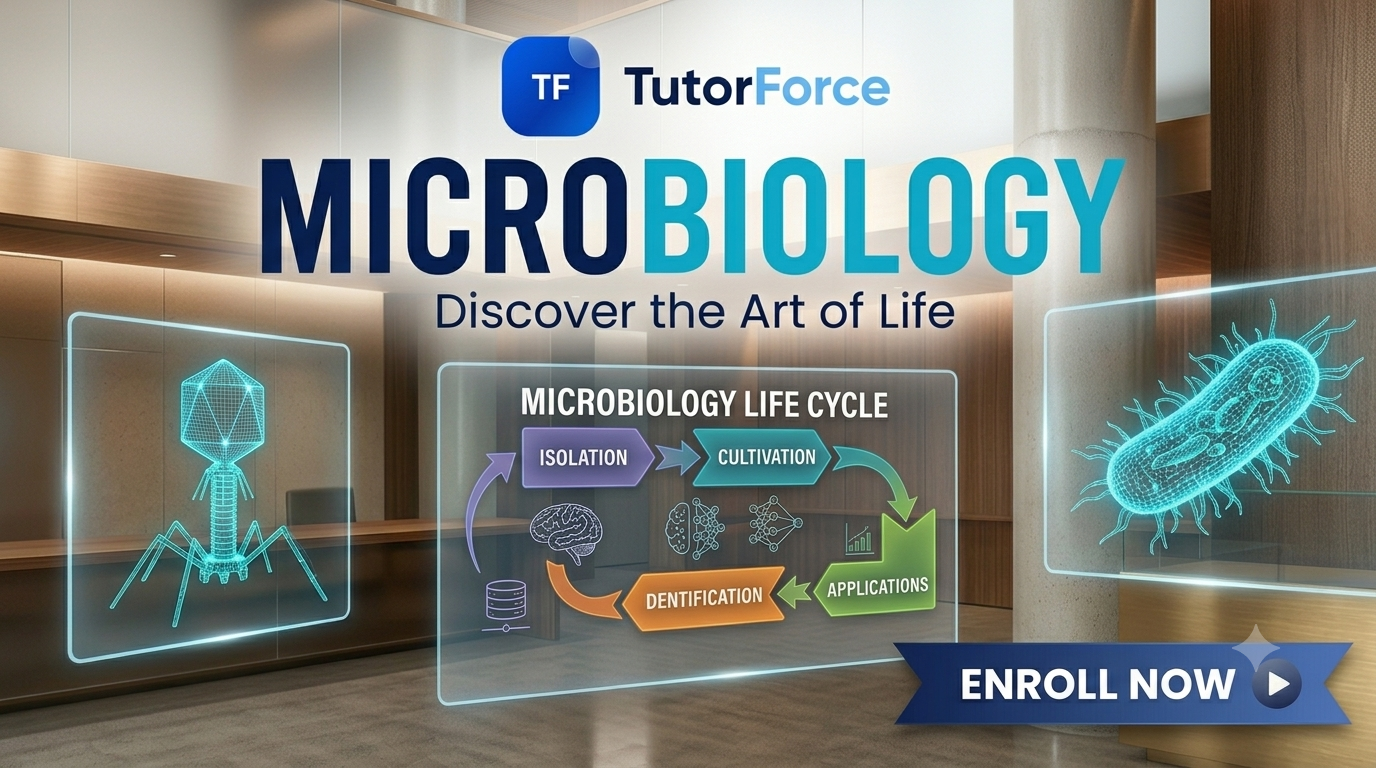
This course provides a comprehensive exploration of the microscopic world, examining the biology, genetics, and ecology of bacteria, viruses, fungi, and protozoa. You will investigate how microorganisms interact with human hosts, the mechanisms of infectious disease, the immune response, and the vital roles microbes play in industrial, environmental, and medical contexts. This curriculum equips you with the foundational scientific knowledge and laboratory concepts required to understand microbial life and its profound impact on health and industry.
Core Topics
-
Microbial Cell Structure and Taxonomy: Comparing prokaryotic and eukaryotic cellular architecture, bacterial morphologies, gram-staining characteristics, and the classification of microorganisms.
-
Microbial Growth and Metabolism: Nutritional requirements, environmental factors influencing growth (temperature, pH, oxygen), energy production pathways, and microbial genetics.
-
Virology and Immunology: Structure and replication cycles of viruses (including bacteriophages and animal viruses), innate and adaptive immunity, and host-pathogen interactions.
-
Pathogenicity and Epidemiology: Mechanisms of bacterial and viral virulence, modes of transmission, principles of epidemiology, and host defense evasion strategies.
-
Antimicrobial Agents and Applied Microbiology: Mechanisms of antibiotics and antiviral drugs, antimicrobial resistance (AMR), and the role of microbes in biotechnology, bioremediation, and food production.
FAQ
-
Why is microbiology crucial in modern healthcare and science? Microbiology underpins our understanding of infectious diseases, vaccine development, pharmacology, and sterile technique in clinical environments. It also drives innovations in green biotechnology and food safety.
-
Are all microorganisms harmful to humans? No. The vast majority of microorganisms are either beneficial or neutral. Human life depends heavily on the microbiome (gut flora) for digestion and immunity, and environmental microbes are essential for nutrient cycling and decomposition.
-
How do bacteria develop resistance to antibiotics? Through genetic mutations or horizontal gene transfer (sharing resistance genes), bacteria can adapt to survive drug treatments, making antimicrobial resistance one of the leading challenges in modern medicine.
Student Ratings & Reviews