
Course Description
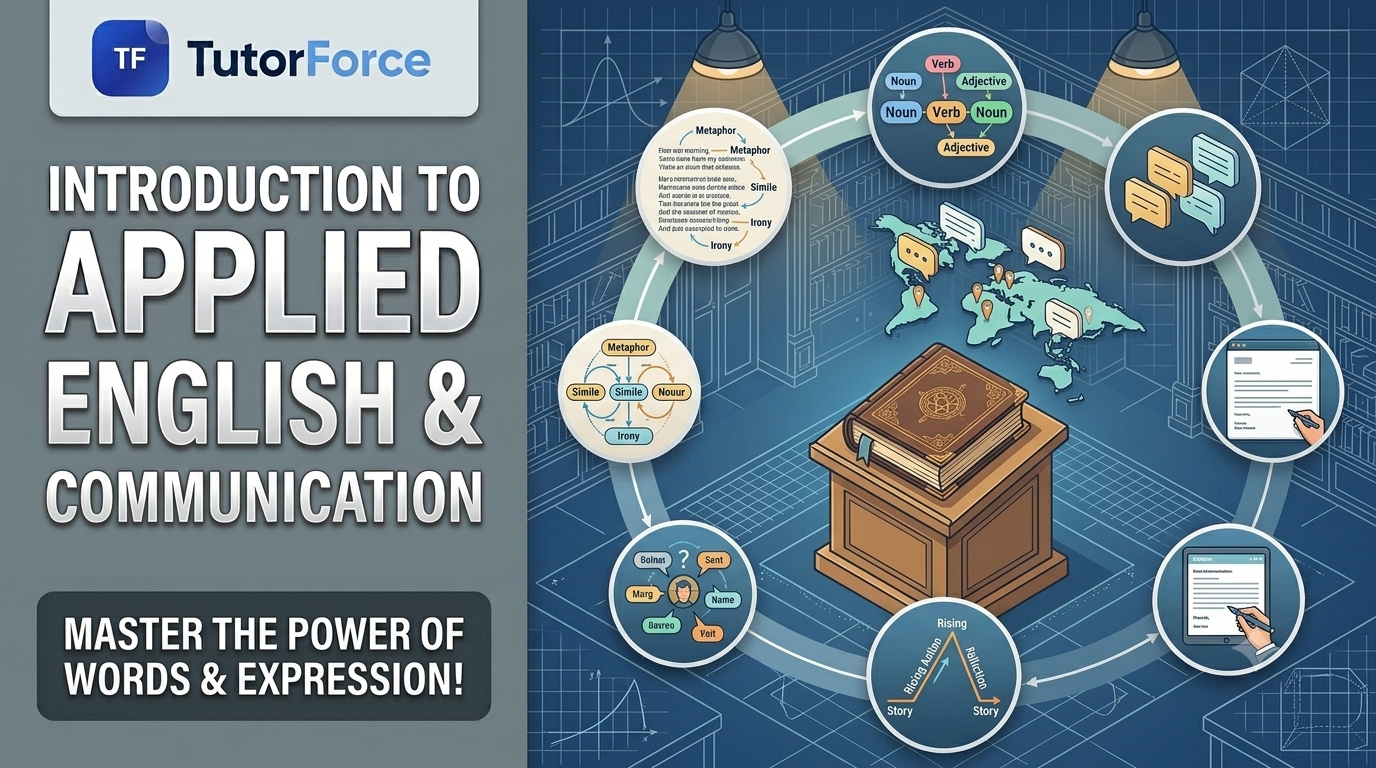
This course is designed to sharpen your analytical reading, written composition, and spoken communication skills. Through the study of classic and contemporary literature, persuasive essays, and language structures, you will learn to craft clear, compelling arguments and critically analyze complex texts. This curriculum equips you with the essential communication tools required for academic success, professional leadership, and articulate self-expression.
Core Topics
-
Literary Analysis and Theory: Deconstructing fiction, poetry, and drama to evaluate theme, character development, tone, narrative perspective, and figurative language.
-
Rhetorical Strategies and Composition: Mastering the art of persuasion by identifying ethos, pathos, and logos, and structuring high-impact argumentative, analytical, and narrative essays.
-
Research, Citation, and Academic Integrity: Formulating research questions, evaluating primary and secondary sources, integrating evidence, and applying standard citation styles (MLA/APA).
-
Advanced Grammar, Mechanics, and Syntax: Refining sentence structure, eliminating common grammatical errors, expanding vocabulary, and adapting writing tone for diverse audiences.
-
Oral Communication and Debate: Crafting and delivering persuasive speeches, engaging in structured academic discussions, and presenting complex ideas clearly to an audience.
FAQ
-
How does this course help outside of humanities fields? Effective communication is a universal skill. Clear writing, logical argument construction, and critical source evaluation are critical in business, law, science, technology, and medicine.
-
What is the best way to improve writing skills quickly? Read widely and edit purposefully. High-quality reading exposes you to strong syntax and vocabulary, while revising your own work helps you spot passive voice, wordiness, and structural gaps.
-
What is the difference between summary and analysis in essay writing? Summary simply retells what happened in a text. Analysis explains how and why the author constructed the text that way and what deeper meaning it conveys.
Student Ratings & Reviews