
Course Description
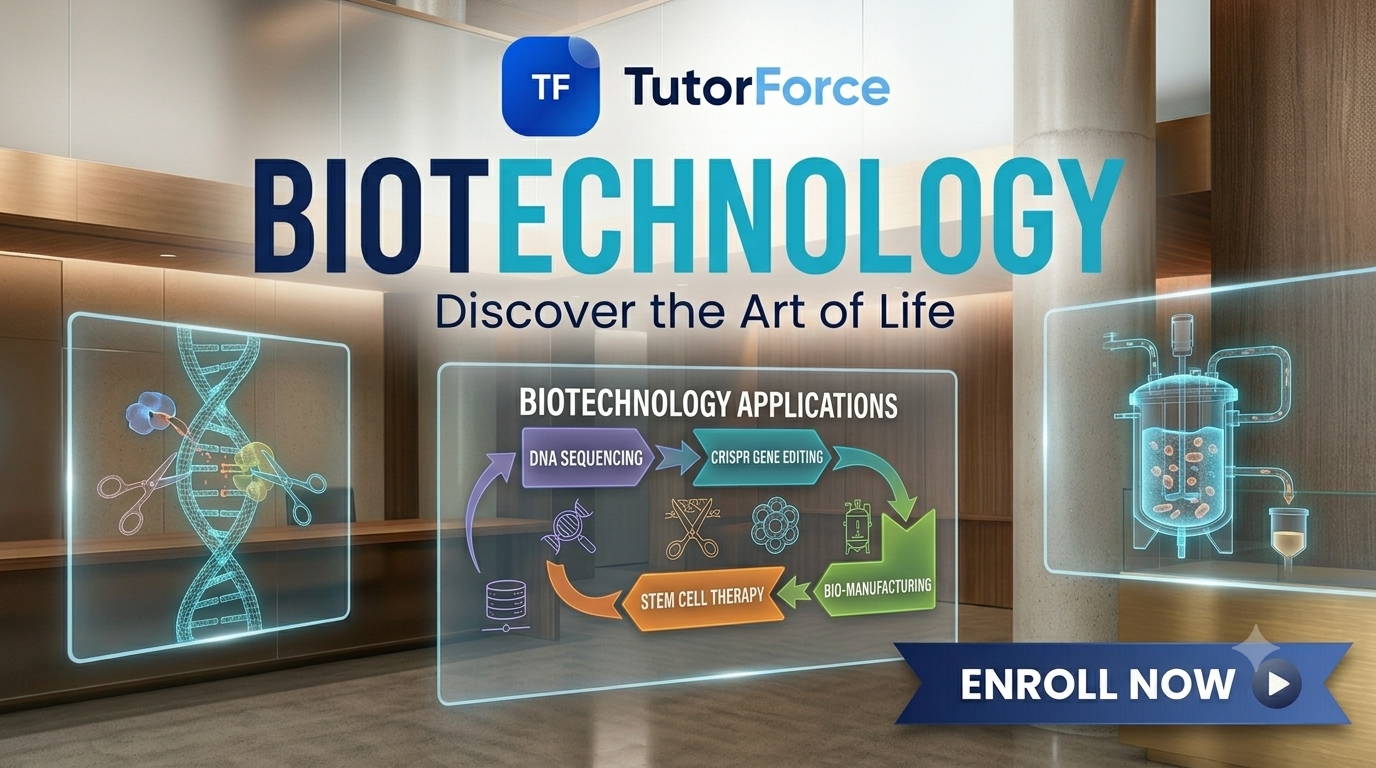
This course provides a comprehensive exploration of biotechnology, bridging molecular biology, biochemistry, and engineering to manipulate living organisms and biological systems for industrial, medical, and environmental solutions. You will investigate recombinant DNA technology, genomics, bioprocessing, and the application of living systems in drug discovery, agriculture, and sustainability. This curriculum equips you with the conceptual framework and technical understanding needed to navigate modern bio-innovation.
Core Topics
-
Molecular Biology Foundations and Recombinant DNA Technology: Structure and manipulation of nucleic acids, restriction enzymes, plasmid vectors, PCR (Polymerase Chain Reaction), and DNA cloning techniques.
-
Genetic Engineering and Gene Editing: Mechanisms of targeted genetic modification, CRISPR-Cas systems, transgenic organisms, and gene silencing technologies.
-
Bioprocess Engineering and Fermentation: Scaling up biological processes, bioreactor design, microbial growth kinetics, and downstream processing for product purification.
-
Medical and Pharmaceutical Biotechnology: Development of biologics, monoclonal antibodies, recombinant vaccines, gene therapy, and personalized medicine.
-
Agricultural and Environmental Biotechnology: Genetically modified (GM) crops, pest-resistant plant traits, bioremediation of pollutants, and biofuel production.
-
Bioethics, Biosafety, and Regulation: Navigating ethical dilemmas in genetic modification, intellectual property, patenting life, and regulatory frameworks for biosafety.
FAQ
-
What is the difference between biology and biotechnology? While traditional biology studies living organisms and their natural interactions, biotechnology applies engineering and technological principles to modify or use biological systems to create practical products and commercial applications.
-
How has CRISPR revolutionized biotechnology? CRISPR-Cas9 acts as a precise molecular scalpel, allowing scientists to target, cut, and edit specific sequences of DNA within living cells much faster, cheaper, and more accurately than previous methods.
-
What are biologics, and how do they differ from traditional drugs? Traditional pharmaceuticals are chemically synthesized small molecules. Biologics are complex therapeutic products—such as proteins, antibodies, or cellular therapies—produced using living biological systems like genetically engineered bacteria or mammalian cell lines.
Student Ratings & Reviews