
Course Description
This course provides a comprehensive introduction to the study of human society, social groups, and social behavior. Moving beyond individual psychology, you will explore how social structures, cultural norms, and major institutions shape our everyday lives, identities, and life chances. This curriculum equips you with the sociological imagination necessary to analyze power dynamics, social change, and the complex relationship between individuals and society.
Core Topics
-
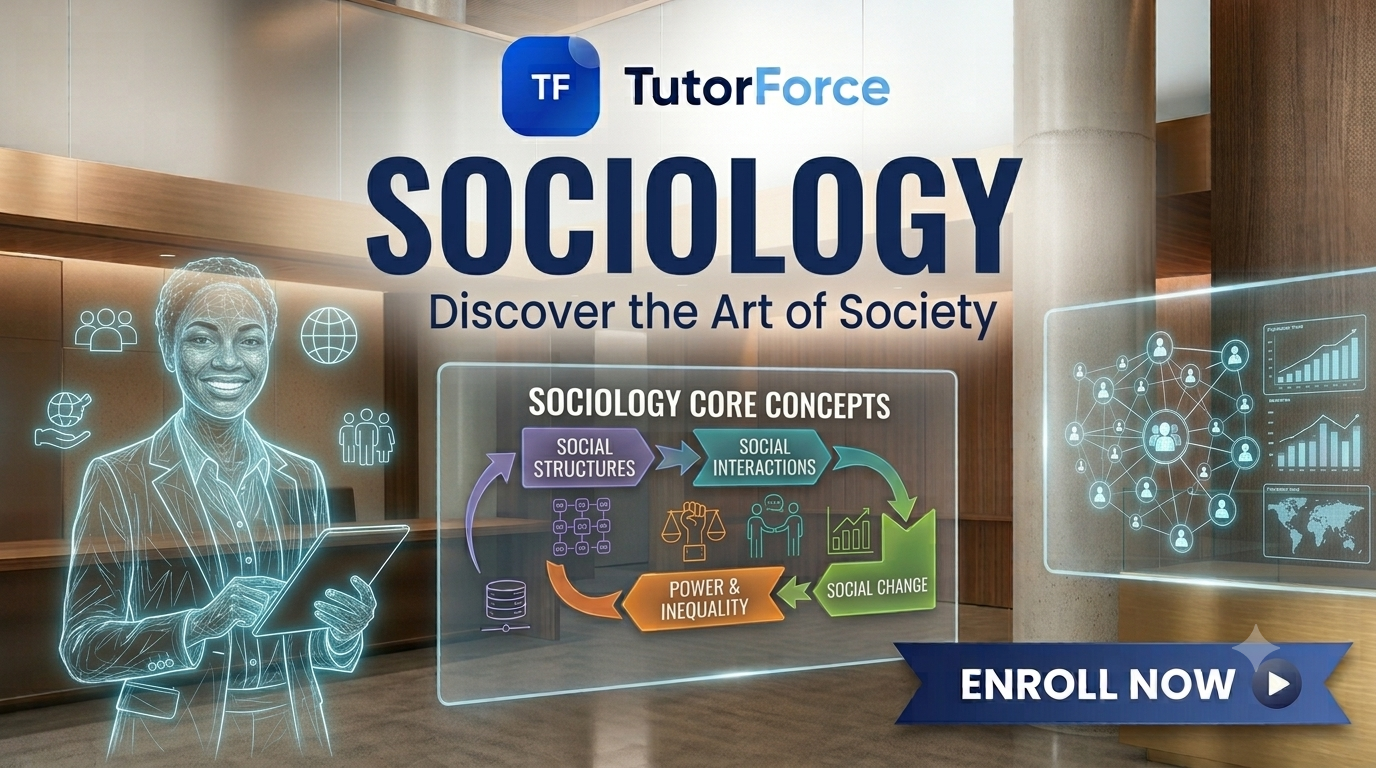
Sociological Perspectives and Methods: The sociological imagination, classical and contemporary sociological theories (functionalism, conflict theory, symbolic interactionism), and qualitative/quantitative research methods.
-
Culture, Socialization, and Identity: Values, beliefs, norms, material vs. non-material culture, agents of socialization (family, peers, media, schools), and the social construction of reality.
-
Social Stratification and Inequality: Class systems, social mobility, poverty, race, ethnicity, gender stratification, and intersectionality in modern societies.
-
Major Social Institutions: The sociological analysis of family structures, education systems, religion, economic institutions, and political power/state structures.
-
Deviance, Social Control, and Social Change: Definitions of deviance, labeling theory, social movements, collective behavior, and how technology and globalization drive social transformation.
FAQ
-
What is the “sociological imagination”? Coined by C. Wright Mills, it is the ability to see the intersection between individual biography and historical/social structures—understanding that personal troubles are often public issues rooted in society.
-
How does sociology differ from psychology? While psychology focuses primarily on the internal mental processes, emotions, and behaviors of the individual mind, sociology focuses outward on group dynamics, social relationships, institutions, and broader societal structures.
-
Why is sociology relevant in the modern world? It provides critical tools to dissect media narratives, understand systemic inequalities, evaluate public policy, and navigate increasingly diverse and globalized communities effectively.
Student Ratings & Reviews